
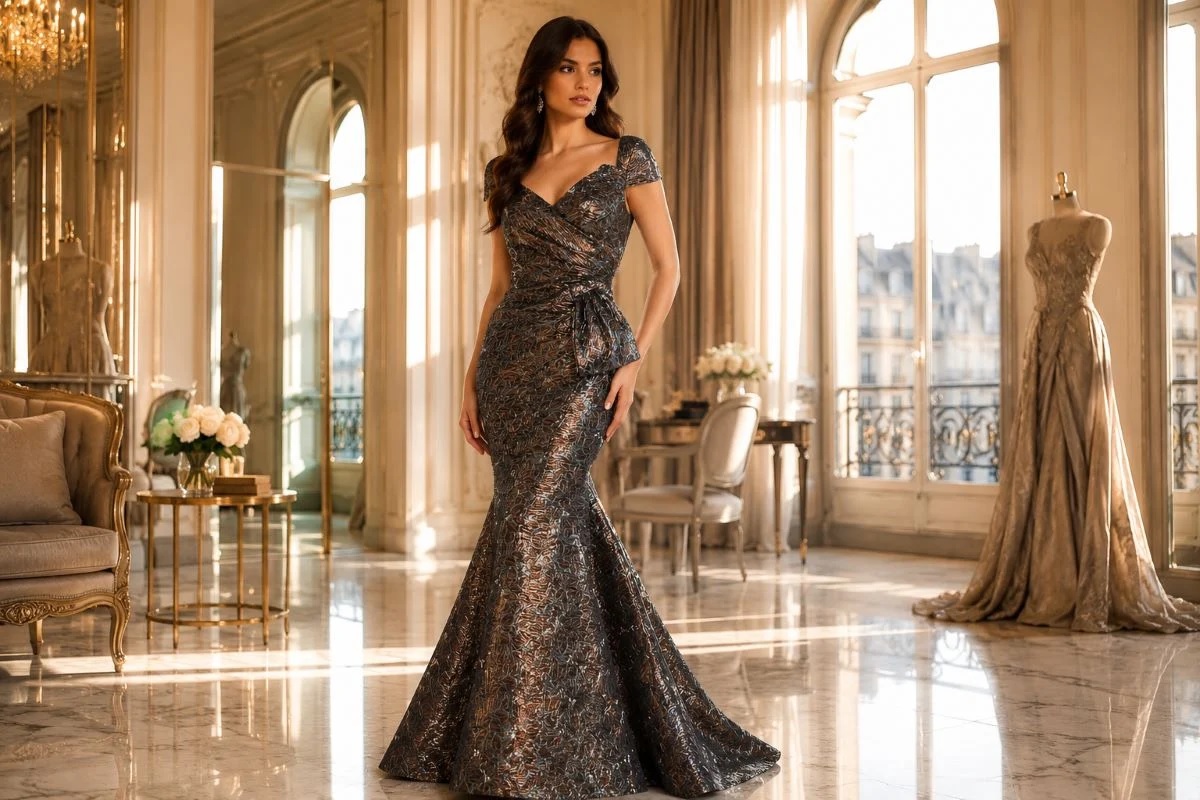
Evening wear exists in a realm entirely separate from daytime attire. While daytime clothing balances utility, durability, and ease, an evening dress is an emotional investment designed around presence, ceremony, and the interplay of light. Long before a tailor sketches a neckline or marks a hemline, the character of a gown is decided by its material. Among the pantheon of formal textiles, two natural champions have reigned across centuries of couture: silk and velvet.
Though both convey an undeniable sense of prestige, they inhabit opposite ends of the tactile and visual spectrum. Silk is fluid, luminous, and kinetic, catching every ambient flicker of candlelight or chandelier glow. Velvet is architectural, brooding, and tactile, absorbing light into its dense pile to create an incomparable depth of tone. Understanding how these fabrics behave, drape, and respond to the human body is essential for anyone seeking an evening piece that transcends fleeting trends and delivers true sartorial gravitas.
The Luminous Fluidity of Silk
Silk remains the undisputed benchmark of textile luxury. Derived from natural protein filaments spun by the silkworm, the fiber possesses a unique triangular prism structure. Unlike synthetic filaments that reflect light uniformly—often resulting in an artificial, plastic-like shine—silk refracts light at varying angles. This internal scattering gives the fabric its legendary opalescence, a gentle, shifting luster that seems to glow from within rather than bounce off the surface.
Beyond its optical qualities, silk behaves like a living second skin. It is remarkably strong despite its delicate hand, naturally breathable, and possesses an inherent drape that follows the contours of the body without clinging stiffly. However, “silk” is not a monolithic fabric; the term refers to the fiber itself, which takes on dramatically different personalities depending on how it is spun and woven.
Defining Silk Weaves for Formal Wear
The choice of weave dictates whether a silk gown falls into liquid ripples, floats weightlessly around the ankles, or stands in dramatic, sculptural pleats.
Silk Charmeuse represents the quintessential evening glamour of old Hollywood. Woven with a satin finish on the face and a muted crepe back, charmeuse delivers a high, buttery sheen and an unrivaled liquid drape. When cut on the bias—diagonally across the grain of the fabric—it hugs curves with effortless sensuality, making it the premier choice for slip gowns, cowl-neck silhouettes, and cascading draped backs.
Silk Chiffon and Georgette introduce ethereal movement. These lightweight, plain-weave fabrics use tightly twisted yarns to produce a sheer, delicate finish. Chiffon offers a smooth, whisper-light float ideal for tiered skirts, billowing bishop sleeves, and dramatic overlayers, while Georgette provides a slightly heavier, crinkled texture that resists static and holds soft gathers with quiet sophistication.
Silk Mikado and Dupioni cater to gowns requiring structure and grandeur. Mikado is a heavier twill-weave silk that carries a subtle, pearlescent glow rather than an overt gloss. It holds structural pleats, sharp waistlines, and architectural ballgown skirts with immaculate precision. Dupioni, woven from uneven double cocoons, offers a crisp hand and distinct horizontal slubs that lend an organic, textured character to dramatic A-line cuts.
Silk Crepe de Chine balances sheen with understatement. With a subtle, sand-washed texture and minimal surface luster, crepe absorbs just enough light to produce a modern, matte finish. It hangs with substantial vertical weight, making it ideal for sleek column dresses, minimalist tailoring, and draped Grecian silhouettes.
The Tactile Depth and Drama of Velvet
Where silk relies on refraction and motion, velvet commands attention through texture, depth, and shadow. Technically speaking, velvet is not a raw fiber, but a complex double-cloth weave. Two layers of fabric are woven simultaneously on a specialized loom, connected by an intricate system of warp threads. As the fabric emerges, a reciprocating blade slices horizontally between the two layers, leaving thousands of upright yarn loops sheared open to create a dense, vertical pile.
This raised pile—known as the nap—is what gives velvet its extraordinary relationship with light. When light hits the fabric directly, the tops of the sheared fibers reflect a subtle sheen; when light hits from an angle, the shadows between the upright yarns deepen into rich, fathomless color. This phenomenon creates the signature high-contrast “bloom” that gives velvet evening gowns their sculpted, three-dimensional presence.
Understanding Velvet Compositions
The performance, weight, and price of velvet depend entirely on the underlying fiber used to construct the pile and the base ground.
Silk-Base Velvet is the absolute pinnacle of luxury velvet manufacturing. Typically crafted with a pure silk backing and either a silk or fine rayon pile, this variation eliminates the stiff, cardboard-like drape associated with heavier furnishing velvets. It feels cool, buttery, and exceptionally light against the body, draping with a languid fluidity that ripples rather than folds. Silk velvet possesses an iridescent shimmer, shifting noticeably in color as the wearer moves through varying light environments.
Viscose and Rayon Velvet has become the gold standard for modern couture evening wear. Because cellulose fibers absorb dye with intense saturation, viscose velvet yields some of the deepest, most arresting jewel tones available in textiles. It drapes with substantial, liquid gravity, making it ideal for floor-length wrap gowns, dramatic cowl fronts, and split-leg evening dresses that pool softly at the floor.
Cotton Velvet, often referred to as velveteen when made with weft loops, offers a firmer, matte appearance. While less common for fluid evening dresses, it is the fabric of choice for structured formal tuxedos, smoking jackets, and structured corseted bodices that require sharp definition without sagging.
Modern textile innovations have also introduced crushed and devoré velvets to formal wear. Crushed velvet is mechanically pressed in diverse directions to create an irregular, gleaming texture that catches light unpredictably. Devoré, or burnout velvet, utilizes a chemical process that dissolves cellulose pile fibers from a sheer synthetic or silk ground, creating intricate, semi-transparent patterns that resemble liquid lace.
Choosing Between Silk and Velvet
Selecting the ideal fabric for a formal occasion requires balancing aesthetic ambition with physical environment, event timing, and structural intent.
Seasonality and Ambient Environment
Seasonality plays a decisive role in fabric selection. Silk is a natural protein that offers intrinsic thermoregulation; it feels cool to the touch on warm summer evenings yet retains body warmth under a light evening wrap. Its breathable weave makes silk charmeuse, chiffon, and crepe the natural selection for spring galas, summer destination black-tie events, and warm-weather banquets.
Velvet, by contrast, is the reigning monarch of autumn and winter occasions. Its dense pile naturally traps heat, providing comfortable insulation for late-season weddings, holiday galas, and chilly evening venues. Wearing a heavy velvet gown to an open-air summer event can quickly become uncomfortable, just as a sheer silk chiffon gown can feel unsubstantial against a December draft.
Silhouette, Structure, and Fit
The intended silhouette of a gown often dictates the textile choice automatically:
-
Choose Silk when the design relies on kinetic motion, transparency, bias cutting, or razor-sharp architectural pleating. A bias-cut gown must mold itself to the body’s movements without resistance, a characteristic that only high-momme silk charmeuse or silk-viscose blends can deliver flawlessly.
-
Choose Velvet when the design demands visual weight, dramatic shadows, or structured warmth. Velvet excels in long-sleeved column gowns, portrait necklines, draped crossover fronts, and evening coats where rich, saturated color can take center stage.
Photographic presence is another crucial consideration. In flash photography, synthetic fabrics often reflect light with an unflattering, chalky glare. Pure silk photographs with a soft, diffused radiance that flatters skin tones, while velvet absorbs camera flash, preserving the rich integrity of deep greens, burgundies, navies, and blacks without blowing out into flat gray highlights.
Harmonizing Both Fabrics in Contemporary Evening Design
There is no rule stating a designer must choose between these two historic textiles. In fact, some of the most memorable pieces in modern evening wear achieve their impact by pairing the crisp, liquid reflection of silk with the plush, light-swallowing depth of velvet.
A classic approach involves using velvet for the bodice to provide visual anchor and support, transitioning into a multi-layered silk chiffon or georgette skirt that moves weightlessly with every step. Similarly, tailored velvet dinner jackets paired with silk satin lapels create a sharp, contrasting boundary between textures that elevates black-tie dressing beyond ordinary convention.
Lining is another essential intersection. A tailored velvet gown fully lined in pure silk habotai or silk crepe ensures that the dress slides effortlessly over undergarments, eliminating bunching while giving the wearer the incomparable sensory pleasure of silk resting directly against the skin.
Caring for Luxury Fabrics
Both silk and velvet demand deliberate, educated care to retain their original hand, luster, and structure over decades of wear.
Silk is particularly vulnerable to moisture spots and friction. Water droplets can cause the fibers to swell unevenly, leaving visible rings that can only be corrected through professional immersion cleaning. Perfume, hairspray, and alcohol-based cosmetics should always be applied and allowed to dry completely before stepping into a silk gown, as alcohol can strip the natural luster and alter dye formulations permanently. Always store silk dresses on padded hangers away from direct sunlight, which gradually breaks down natural silk proteins and leads to fiber brittleness.
Velvet requires an entirely different preservation philosophy centered on protecting the integrity of the nap. The vertical pile can be crushed permanently by heavy horizontal pressure, improper folding, or direct heat. Never apply an ordinary iron to the face of velvet; the hot metal plate will irreversibly crush the pile, leaving shiny, scarred patches across the fabric.
Instead, velvet should only be refreshed using gentle vertical steam, preferably directed from the back side of the fabric, allowing the steam to rise through the weave and lift the fibers naturally. If a velvet dress must be hung, use wide, contoured, velvet-flocked hangers to prevent pressure ridges across the shoulders, and never clamp velvet skirts or waistbands with metal clips without protective foam padding.
The Endurance of True Quality
Fashion cycles churn relentlessly, offering seasonal novelties and synthetic alternatives that promise easier maintenance at lower costs. Yet, synthetic polyester satins and acrylic velours inevitably fall short of their natural muses. They trap heat without breathing, reflect light with an unforgiving shine, and lack the sensory soul that makes formal dressing truly transformative.
Silk and velvet endure because they engage the senses completely. Silk honors the beauty of human motion, dancing with the slightest air current and trailing softly across polished floors. Velvet honors the architecture of form, wrapping the wearer in a sanctuary of rich color and tactile comfort. Whether chosen individually or paired in deliberate harmony, these two storied textiles remain the timeless standard of evening grace, elevating every appearance from a simple arrival into an indelible impression.
Meta Title: