
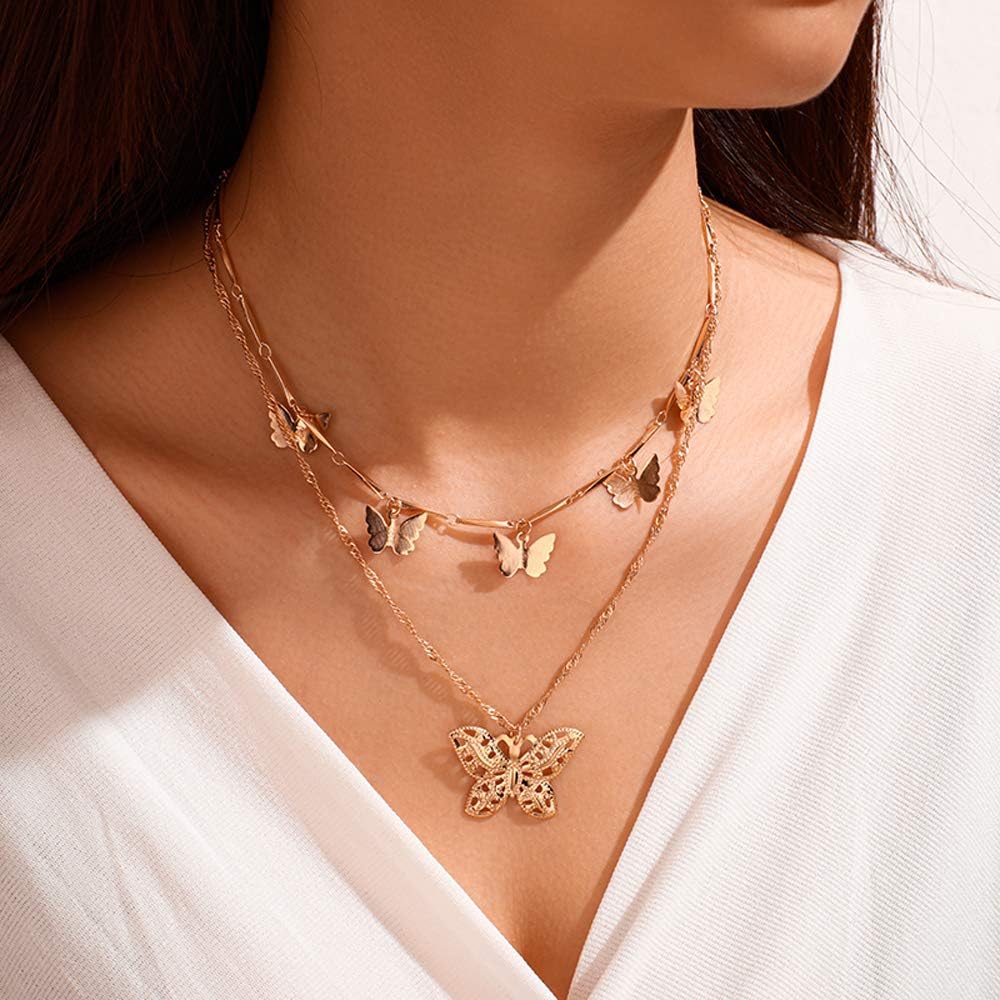
An outfit succeeds or fails in the quiet space where fabric meets skin. When an otherwise sharp ensemble feels unresolved, the culprit is rarely the clothing or the jewelry on its own. Almost always, it is a collision at the collarbone.
A neckline serves as the structural frame for your face, neck, and shoulders. Jewelry acts as the focal accent placed within, or set against, that frame. When the two elements compete for visual real estate, they create friction: pendants get swallowed by overlapping collars, chains clash with sweeping cuts, and delicate stones disappear against bold, textured weaves. When they work in harmony, the pairing looks completely intentional.
Mastering this balance does not require an encyclopedic jewelry box. It requires understanding geometry, negative space, and proportion.
The Principle of Negative Space and Visual Weight
Before reaching for a chain or a pair of earrings, evaluate the amount of exposed skin your top or dress creates. This open area is your canvas, and it dictates the scale and shape of the jewelry you choose.
In styling, negative space refers to the bare expanse between your jawline and the edge of your collar. If a garment offers ample negative space, such as a strapless dress or an unbuttoned silk shirt, you have room to introduce a defined focal piece. Conversely, garments with minimal negative space, such as turtlenecks or high-buttoned collars, shift the focus entirely. In those cases, any jewelry resting against the chest must interact directly with the texture and color of the fabric rather than resting cleanly on bare skin.
Visual weight is equally critical. Heavy fabrics demand jewelry with enough presence to hold its own, whereas lightweight, diaphanous materials can be overwhelmed by chunky statement hardware. The goal is never to fill every square inch of exposed skin, but rather to direct the eye smoothly upward toward your face.
Matching Necklaces to Classic Neckline Silhouettes
Different cuts create distinct lines across the chest. The most reliable way to select a necklace is to either echo the angle of the neckline or deliberately counterbalance it with calculated intent.
The V-Neck
The V-neck is an inherently elongating cut that draws the eye downward along a diagonal path. The cardinal rule of styling a V-neck is to honor that natural downward momentum.
A pendant on a delicate chain that mirrors the V-shape works best here. The pendant should rest comfortably inside the boundary of the V, ideally sitting at least one inch above the fabric’s lowest point. If the pendant hangs past the edge of the collar and crosses onto the fabric, it disrupts the clean line of the silhouette.
For deeper plunges, consider a sleek lariat necklace or a tiered set of chains that taper in length to mimic the widening angle of your lapels. Avoid wide, rounded chokers or stiff collar necklaces with a V-neck, as their horizontal curves clash sharply with the garment’s downward angles.
The Crew Neck
The crew neck is ubiquitous, but it presents a unique styling challenge because of its close fit around the base of the throat. Because it sits high on the chest, a small pendant on a short chain tends to look lost, frequently slipping under the fabric edge with natural body movement.
You have two effective routes with a crew neck:
-
Shorter and wider: A bold collar necklace or a structured bib that sits flat over the fabric, following the exact curve of the crew band, creates an ornamental collar effect.
-
Long and vertical: A long chain or pendant necklace hanging mid-chest (around 24 to 30 inches) cuts through the broad horizontal expanse of fabric, visibly lengthening your torso.
If your crew neck is made of a thick knit, a third option is often the most sophisticated: forego a necklace altogether and pivot your focus toward sculptural drop earrings and stacked rings.
The Scoop Neck
A scoop neck offers a soft, generous U-shaped opening that showcases the collarbones. It is one of the most versatile backdrops for jewelry because it naturally accommodates rounded designs.
Short necklaces that follow the curve of the scoop are ideal. A classic single strand of pearls, a collar-length tennis necklace, or a graduated bead necklace fills the space beautifully without crowding the garment. Ensure the necklace sits securely on bare skin; if it bounces against the hem of the scoop with every step, lengthen or shorten the chain to establish clear separation.
Strapless and Off-the-Shoulder
A strapless or off-the-shoulder cut provides an uninterrupted stretch of bare skin across the chest and shoulders. While it can be tempting to choose oversized pieces to cover the space, restraint often yields a far more striking result.
A structured choker or a sleek collar necklace highlights the delicate anatomy of the clavicle without competing with the horizontal horizon of the fabric. If you prefer a romantic aesthetic, a floating pendant on a fine 16-inch chain maintains an airy, light feel.
Alternatively, this is the prime neckline for skipping the necklace entirely. Leaving the décolletage completely unadorned while wearing architectural chandelier earrings draws immediate focus to the jawline, neck, and shoulders, creating an elongated, modern profile.
The Square Neckline
Square necklines are defined by sharp corners, straight horizontal cuts across the bust, and vertical shoulder straps. They evoke a structured, tailored sensibility that requires careful styling.
To lean into the architectural feel of the cut, choose necklaces with distinct geometric elements, such as bar pendants, rectangular medallions, or angular chains. Keep the length relatively short so the pendant remains framed neatly within the open square.
If you prefer to soften the rigidity of a square neckline, reach for a circular pendant or a strand of uniform round beads. The juxtaposition of soft curves against crisp right angles creates dynamic visual contrast, provided the piece does not rest directly on the straight horizontal seam.
The Sweetheart Neckline
With its dual curved dips accentuating the bust, the sweetheart neckline is inherently feminine and shapely. Angular, aggressive jewelry often looks out of place against such romantic tailoring.
Curved pendants, drop necklaces with soft teardrop stones, and delicate layered chains complement the sweetheart silhouette seamlessly. Select a piece that terminates in a gentle point to subtly reflect the dip of the heart, while making certain that the lowest drop sits well above the center fold of the fabric.
The Halter and High Neck
High-neck tops, mock necks, and traditional halter cuts bring fabric close to the chin, leaving virtually no exposed skin around the throat. Adding a short necklace to a high neckline creates instant visual clutter, bunching fabric and causing chains to twist awkwardly.
With high necklines, let the garment serve as the centerpiece and relocate your jewelry emphasis elsewhere. Long, dramatic drop earrings draw the eye upward and elongate the neck. If your hair is pulled back, bold ear cuffs or statement studs add polish. Balance the look by adding weight to your lower arms with a wide cuff bracelet worn over a sleek sleeve or stacked bangles on bare wrists.
Boatneck (Bateau)
A boatneck sweeps horizontally across the collarbones, resting near the edge of the shoulders. Because it emphasizes breadth, wearing a short necklace tends to create a cramped, horizontal collision.
To balance the wide line of a boatneck, introduce strong vertical lines with long necklaces that fall to the mid-torso. A single long lariat or opera-length string of knotted gems breaks up the broad expanse of fabric across the chest. Alternatively, preserve the clean minimalism of the neckline by leaving the chest bare, relying on bold studs and textured rings to complete the styling.
Fabric, Texture, and Metal Proportions
A necklace does not float in a vacuum; it rests against the physical material of your clothing. Factoring in the weight and surface texture of that fabric is just as crucial as matching the shape of the cut.
Fine, whisper-thin chains with tiny charms tend to disappear into heavy knits, tweeds, and corduroys, often getting snagged in the loops of yarn. Pair these substantial, textured fabrics with bolder hardware, thicker chains, and smooth, oversized stones that have enough presence to sit flat.
Conversely, lightweight fabrics such as silk, satin, chiffon, and fine linen require lighter jewelry. A chunky, aggressive metal chain can pull down the neckline of a bias-cut slip dress, distorting the cut and causing the fabric to drape unevenly. Match the physical gauge of your jewelry to the weight of your garment for a cohesive presentation.
When it comes to metal selection, the color and tone of the fabric play a determining role. Cool-toned metals like silver, platinum, and white gold pair effortlessly with sharp blacks, crisp whites, blues, and cool grays. Warm metals like yellow gold, bronze, and brass enhance earth tones, warm neutrals, and rich jewel colors. Do not fear mixed metals, either, as long as the design of the pieces feels deliberate rather than accidental.
Balancing Your Entire Jewelry Suite
One of the most frequent styling missteps is the compulsion to wear an all-inclusive, matching set. Pairing a statement necklace with matching statement earrings and an identical bracelet often feels stiff and dated.
A modern approach relies on hierarchy. Decide early which element of your outfit is the hero piece, and let every other accessory play a supporting role.
-
If your neckline calls for a commanding statement necklace, keep your earrings minimal. A pair of understated metal studs or subtle huggies ensures your chest remains the undisputed focal point.
-
If your neckline is complex, asymmetric, or highly detailed with ruffles or ties, make your earrings the star of the show. Opt for striking drops or sweeping sculptural pieces, and keep the neck entirely free of hardware.
-
If you choose to wear both a necklace and earrings, create contrast in scale. A bold necklace pairs best with quiet earrings, while statement earrings look most refined when paired with a bare neck or an extraordinarily delicate, whisper-thin chain.
When in doubt, apply the editor’s eye: step back from a full-length mirror, identify the very first place your gaze lands, and remove whichever piece is competing with that primary focal point. True elegance is always about intentional alignment, not excess.


