
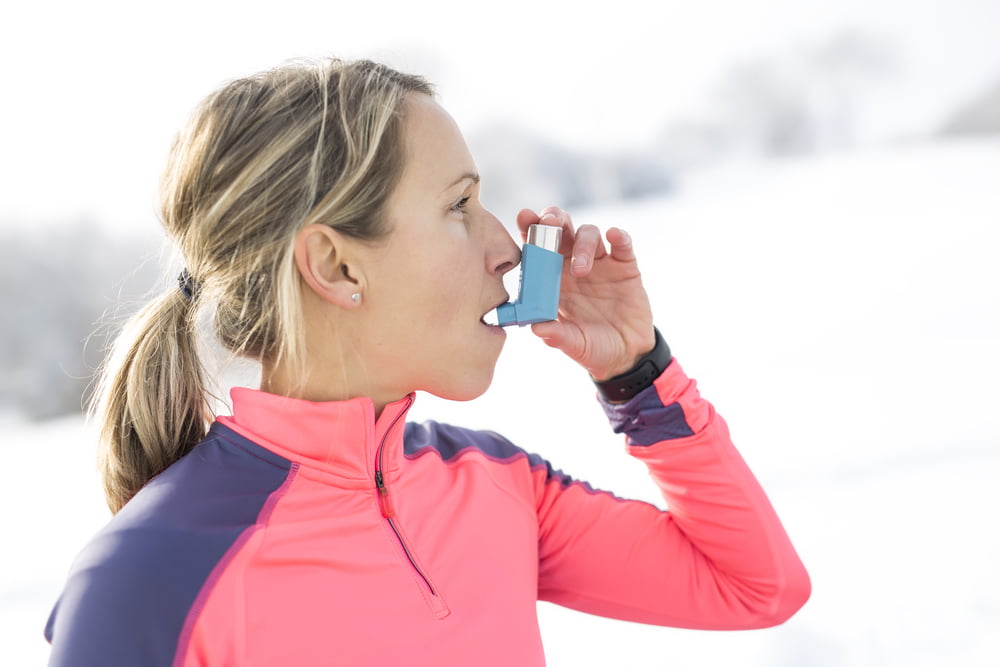
You finish a demanding tempo run, step off the rowing machine, or wrap up an intense interval session. Muscularly, you feel accomplished. Your legs handled the pace, and your heart rate is steadily descending back toward baseline. But within five to ten minutes of stopping, your chest tightens with a scratchy sensation, and an involuntary, hacking cough takes over. Every deep breath feels raw, like inhaling dry winter air through a narrow straw.
The instinct for many athletes and fitness enthusiasts is to blame poor conditioning. It is easy to assume that burning lungs and a persistent post-workout hack simply mean you pushed beyond your aerobic capacity.
In reality, coughing after cardiovascular exercise often has nothing to do with how fit you are. It is frequently the hallmark of exercise-induced bronchoconstriction (EIB), commonly referred to as exercise-induced asthma. Understanding the physiological chain reaction behind this reaction is the first step toward running, cycling, and training hard without paying for it in coughing fits afterward.
What Happens Inside Your Airway During High-Intensity Cardio
Under resting conditions, your respiratory system operates with built-in climate control. When you breathe through your nose at rest, the complex architecture of your nasal passages filters, warms, and humidifies ambient air before it reaches your lungs. By the time that air arrives at your bronchial tubes, it has been heated to core body temperature and saturated with near one-hundred percent relative humidity.
When you transition into moderate or high-intensity cardio, your body demands an enormous surge in oxygen intake. Your respiratory rate climbs, and your tidal volume expands dramatically. To pull in the thirty to one hundred liters of air per minute required to sustain that effort, you instinctively switch from nasal breathing to mouth breathing.
Bypassing the nose strips away your body’s natural conditioning chamber. Rapid volumes of cooler, drier air dump directly into the lower respiratory tract. As this dry air rushes across the thin layer of moisture coating your bronchial passages, it forces that moisture to evaporate at an unsustainable speed.
This rapid evaporation sets off two distinct physiological cascades that trigger your airways to clamp shut:
The first is the osmotic response. When the liquid layer lining your respiratory tract evaporates too quickly, the residual fluid becomes hyper-concentrated with salts and proteins. Specialized immune cells stationed along the mucosal lining, known as mast cells, sense this sudden shift in salinity. Treating the dehydration as a form of cellular stress, they degranulate, releasing potent inflammatory chemicals including histamine, prostaglandins, and leukotrienes.
The second is the thermal response. Inhaling vast quantities of ambient air cools the bronchial tissue down several degrees. Once your workout intensity drops or you finish your session, blood rushes back into the chilled microvascular vessels of the bronchial walls to warm them back up. This sudden rush of blood, known as reactive hyperemia, causes the tiny vessels to swell and engorge, physically narrowing the diameter of the airway from the outside while the inflammatory cascade constricts it from the inside.
Surrounding your airways are rings of smooth muscle. Under the influence of histamine, leukotrienes, and thermal swelling, these smooth muscles spasm and contract violently. The lumen of your airways shrinks, mucus production ramps up in an attempt to protect the dried tissue, and your nervous system triggers a persistent cough reflex to clear what it perceives as an obstruction.
Why the Cough Often Peaks After You Stop Moving
A frustrating aspect of exercise-induced bronchoconstriction is its delayed arrival. Many athletes breathe reasonably well during the heat of a workout, only to be hit with uncontrollable coughing ten to fifteen minutes after crossing the finish line or stepping into the locker room.
This delay occurs because vigorous exertion floods your bloodstream with circulating adrenaline (epinephrine). Adrenaline is a powerful natural bronchodilator. It binds directly to beta-2 adrenergic receptors on airway smooth muscles, forcing them to remain relaxed and dilated even while the underlying tissue is becoming dehydrated and irritated.
As soon as your workout concludes, your sympathetic nervous system downshifts. Circulating adrenaline levels drop precipitously within minutes. The protective chemical shield keeping your airways open disappears, exposing the inflamed, irritated lining beneath.
Simultaneously, the rapid rewarming of your bronchial vessels peaks right as your ventilation rate slows down. With adrenaline gone and vascular engorgement at its highest point, airway resistance spikes, triggering that familiar fit of dry, spasming coughs.
Conditioning Deficit Versus Bronchial Constriction
Distinguishing between simply being out of shape and experiencing true airway constriction is critical for your training progress. While both conditions can leave you gasping for breath, their physiological footprints are distinct.
When a workout exceeds your current aerobic fitness level, your limitation stems from cardiovascular and metabolic output. Your heart is beating near its maximum rate, your muscles are accumulating metabolic byproducts faster than your circulatory system can clear them, and your legs feel heavy or uncoordinated. However, within two to three minutes of stopping, your breathing naturally smooths out, your heart rate recovers, and your chest feels comfortable. You do not cough, and your airways feel completely clear.
In contrast, exercise-induced bronchoconstriction presents with symptoms that often worsen well after your heart rate has normalized. Telltale signs include:
-
A dry, hacking cough that begins five to twenty minutes after completing a workout and lingers for up to an hour.
-
A sensation of tight constriction across the sternum, often described as feeling like an elastic band cinched around the ribcage.
-
An audible, high-pitched wheezing or whistling sound, particularly during long exhalations.
-
An unusual drop in stamina during prolonged steady-state sessions, where breathing feels mechanically limited rather than metabolically fatigued.
-
Excessive throat clearing and a persistent tickle deep in the throat that cannot be resolved by drinking water.
Notably, EIB is widespread among elite competitors. Studies across endurance sports consistently reveal that competitive cross-country skiers, long-distance runners, professional swimmers, and cyclists experience exercise-induced bronchoconstriction at rates far higher than the sedentary population. Developing this post-cardio cough is not a reflection of poor discipline or inadequate stamina; it is a physiological vulnerability brought on by moving immense quantities of ambient air.
Environmental Triggers That Amplify Airway Spasms
While the volume of your breathing is the primary engine behind airway dehydration, the characteristics of the air you inhale determine how severe the reaction will be.
Cold and Dry Air
Cold air has an extremely low moisture-carrying capacity. Breathing freezing or near-freezing air accelerates the evaporation of your airway lining exponentially compared to humid summer air. This is why distance runners frequently experience what is colloquially known as “winter track hack.” The combination of high minute ventilation and sub-freezing, low-humidity air creates the perfect storm for severe osmotic shock along the bronchial tree.
Chlorinated Indoor Pools
Swimmers operate in warm, humid air, which normally shields the lungs from dehydration. However, indoor aquatic facilities carry a unique irritant: trichloramine. When chlorine used to sanitize pool water reacts with organic matter like sweat and skin cells, volatile chloramine gases form and hover directly above the water’s surface. When competitive swimmers breathe heavily inches from the water line, these chemical vapors directly injure the respiratory epithelium, causing chemical-induced airway hyperresponsiveness that mimics classic cold-weather EIB.
Air Pollution and Ground-Level Ozone
Training outdoors alongside congested traffic corridors exposes your lungs to fine particulate matter known as PM2.5, alongside nitrogen dioxide and sulfur dioxide. These microscopic pollutants penetrate deep into the lower lobes of the lungs, inducing acute oxidative stress and amplifying underlying inflammation. During warmer months, ground-level ozone forms via chemical reactions between sunlight and vehicle exhaust, acting as a direct respiratory irritant that sensitizes airways to spasm during exertion.
Dust and Dry HVAC Air in Commercial Gyms
Indoor gym spaces can present surprising hurdles. High-velocity heating or cooling systems often cycle exceptionally dry air through crowded rooms. Add in suspended chalk dust, carpet fibers, and aerosolized disinfectant sprays used to wipe down equipment, and the indoor workout environment can become just as reactive to sensitive bronchial passages as an icy outdoor trail.
The Refractory Period and the Strategic Warm-Up
One of the most effective non-pharmaceutical methods for blunting exercise-induced asthma is capitalizing on an interesting physiological window known as the refractory period.
After an initial mild episode of airway constriction, the smooth muscle around your bronchial tubes enters a temporary protective state lasting anywhere from thirty minutes to two hours. During this refractory window, your airways are remarkably resistant to further spasming, even if you subsequently engage in maximal-effort cardio.
Scientists attribute this phenomenon to two mechanisms: the temporary depletion of inflammatory mediators (such as histamine and leukotrienes) from local mast cells, and the release of protective, smooth-muscle-relaxing prostaglandins.
You can harness this mechanism intentionally by replacing a casual or non-existent warm-up with a structured, variable-intensity protocol:
-
Spend five to eight minutes walking or performing very light jogging to gradually raise your core temperature.
-
Perform three to five intervals consisting of thirty seconds of moderately high-intensity work (roughly eighty to eighty-five percent of your maximum capacity), followed by two minutes of easy walking recovery between each surge.
-
Rest for five to ten minutes before beginning your primary cardiovascular workout.
This interval-based warm-up deliberately induces a subtle, controlled release of inflammatory mediators without completely closing down your lungs. By the time you start your actual training session, your airways have entered their natural refractory state, allowing you to sustain high cardiovascular outputs with significantly less coughing afterward.
Behavioral Adjustments to Protect Your Airway
Beyond timing your warm-ups, making conscious adjustments to how and where you breathe can dramatically reduce thermal and osmotic shock to your respiratory lining.
Prioritize Nasal Breathing During Base Building
While pure nasal breathing is virtually impossible during high-intensity intervals or all-out sprints, it should be your default during low-intensity recovery runs, long zone-two bike rides, and base-building workouts. Keeping your mouth closed forces incoming air through the humidifying nasal turbinates, sparing your lower lungs from unnecessary dehydration. Over time, practicing nasal-only breathing at easy training paces improves your carbon dioxide tolerance and conditions your respiratory system to handle greater workloads before mouth breathing becomes mandatory.
Use a Heat-and-Moisture Exchange Layer
When training outdoors in freezing or dry weather, wear a lightweight thermal neck gaiter, buff, or specialized cold-weather training mask over your nose and mouth. As you exhale, your breath saturates the fabric with warmth and moisture. When you inhale the next breath, the incoming cold, dry air passes through the warmed, damp fabric first, pre-conditioning the air before it reaches your vocal cords and bronchi. This simple barrier can single-handedly eliminate post-run coughing fits in sub-freezing climates.
Monitor Air Quality and Pollen Forecasts
Check local air quality indices before scheduling high-ventilation workouts outdoors. When particulate matter, ground-level ozone, or relevant pollen counts are in the moderate-to-unhealthy range, shift high-intensity intervals indoors or swap your intense session for an easy recovery day. When running near roads, plan routes through parks, residential neighborhoods, or trails set back from major multi-lane thoroughfares to reduce exposure to diesel exhaust.
Optimize Systemic Hydration
Because the primary trigger of bronchoconstriction is the evaporation of fluid from the airway surface, systemic dehydration significantly compounds the issue. When total body water is depleted, your body produces less fluid to lubricate mucosal membranes. Ensuring adequate daily hydration, supplemented with balanced electrolytes during extended endurance sessions, provides your respiratory mucosa with the fluid volume necessary to resist rapid drying.
Medical Evaluation and Therapeutic Management
If structured warm-ups, moisture barriers, and environmental safeguards do not resolve your post-cardio cough, consulting a medical professional is the next logical step. A pulmonologist, allergist, or sports medicine physician can formally evaluate your lung function and separate exercise-induced bronchoconstriction from other respiratory conditions.
Diagnosis typically involves spirometry testing, which measures the volume of air you can exhale and how rapidly you can expel it. To definitively confirm EIB, physicians often perform an exercise challenge test or a eucapnic voluntary hyperpnea test. These assessments evaluate your baseline lung function, expose you to cold, dry air or high-ventilation breathing, and measure how much your forced expiratory volume drops afterward.
When medical intervention is appropriate, physicians have proven pharmaceutical options to keep airways open:
-
Short-Acting Beta-Agonists (SABAs): Inhalers such as albuterol are the gold-standard first-line treatment for acute prevention. Taken fifteen to twenty minutes prior to beginning exercise, albuterol relaxes smooth muscle rings around the bronchioles, physically preventing them from spasming during or after your workout.
-
Inhaled Corticosteroids (ICS): For individuals who experience frequent symptoms or who have underlying baseline asthma, daily low-dose inhaled corticosteroids reduce chronic baseline inflammation along the airway lining, blunting hyperresponsiveness over the long term.
-
Leukotriene Receptor Antagonists: Oral medications like montelukast block the specific inflammatory receptors targeted by leukotrienes. Taken daily, they can significantly reduce airway sensitivity in cold, dry conditions and are especially beneficial for athletes who also manage seasonal allergic rhinitis.
Using a prescribed pre-workout inhaler is not an admission of defeat, nor does it mean your fitness is deficient. It simply normalizes airway diameter, providing the mechanical clearance required to train your cardiovascular system safely and comfortably.
Reclaiming Your Workouts
A lingering, rasping cough after cardio is a sign of an irritated, spasming respiratory tract. Pushing through the discomfort without addressing the underlying mechanics only causes recurring epithelial inflammation and unnecessarily miserable training sessions.
By recognizing the roles that dry air, osmotic fluid loss, and thermal rebound play in post-exercise coughing, you can take control of your breathing health. Implement an interval-based warm-up to trigger a protective refractory window, use moisture-trapping barriers when temperatures plummet, and consult a physician for targeted medical support if your symptoms persist. With the right approach, you can push your cardiovascular boundaries to their absolute limits and finish your workouts with calm, clear lungs.